Background Overview
Students, young professionals, and people living away from home face a daily struggle that goes beyond academics or work , cooking for themselves.
Moving out brings freedom, but also the everyday question of " What should I eat tonight?". For students and busy professionals, limited time and little cooking experience means groceries go to waste, recipes feel overwhelming and takeout becomes routine. What should be simple instead turns into stress, waste and lost confidence .
This everyday struggle opened the door for a solution designed to make cooking easier, smarter, and more supportive.
Feature Highlights:
Subtitle
Title
Subtitle
Title
Subtitle
Title
Subtitle
Title
Exploring user pain points
Designing the flow
Prototyping my idea
My Role:
As the sole designer on this project, I took ownership of the end-to-end design process, from discovery and research to wireframing, prototyping, and final execution. I acted as both strategist and creator, ensuring every decision stayed true to user needs and the overall product vision.
Project Goal:
My goal was not to design just another recipe app, but a true cooking companion. The vision was to create a product that makes planning effortless, cooking guided, and progress visible, helping users turn wasted groceries and stressful decisions into simple, sustainable routines.
defining the problem
Nearly 40% of food is wasted, and much of it comes from households just like those of students and busy professionals. Groceries are bought with good intentions but nearly 90% of what gets thrown away is still perfectly edible. For people living away from home, this cycle of waste isn’t just about money — it adds stress, guilt, and contributes to a much bigger global problem.
CHallenge
To create a digital solution that empowers busy students and professionals living away from home to plan smarter, minimize food waste, and build confidence in cooking.
My findings
Primary Research
To deeply understand how students, young professionals, and people living away from home manage cooking, I conducted in-depth interviews and a survey (ages 18–32). These conversations revealed that cooking was not just a functional task — it was tied to stress, time pressure, confidence, and even guilt about waste.
Many participants admitted groceries often went to waste,
with fresh vegetables and diary spoiling before they were used.
Meal Planning was rare, and mostly decided what to eat at the
very last minute, often out of convenience.
Takeout was a frequent fallback, especially after long days
when energy for cooking is very low.
Recipes found online were described as overwhelming,
assuming skills, tools, or ingredients users didn't have.
Time pressure was consistently cited as the biggest barrier,
making cooking feel like an added chore.
Decision fatigue was a recurring frustration, with users saying
the hardest part wasn't cooking but choosing what to make.
Most stuck to a very limited set of dishes, repeating the same
meals due to lack of variety and confidence.
Users wanted a solution that made cooking simpler, more
guided and less wasteful.
Cooking often feels overwhelming for students and busy professionals — from last-minute meal decisions to unused groceries, the daily struggle isn’t about food itself, but about time, planning, and confidence in the kitchen.
Household waste: One-third of all food in the US goes uneaten from households.
Financial loss: $728 waster per person each year.
Small Households: Singles waste more that that of families.
Meal planning gap: Poor planning leads to spoilage and takeout.
Time pressure: Busy lives make cooking feel overwhelming.
Confidence Barrier: Recipes often feel too complex leading to lack of confidence
Decision fatigue: Choosing meals is a daily struggle.
Emerging solutions: Digital tools help cut the waste.
Secondary Research
I reviewed industry reports and case studies to understand how poor planning, overbuying, and lack of cooking confidence contribute to household food waste, especially for students and busy professionals living away from home.
demerit
Limited flexibility, meals can't adapt to what users already have.
Feature heavy and tied only to Samsung ecosystem, overwhelming the beginners.
Too many choices cause decision fatigue, with limited pantry personalization.
Company name
Hello fresh
Samsung food
Yummly
Merit
Provides pre-portioned ingredients with clear recipe cards.
AI powered ingredient recognition and meal planning.
Large recipe library with guided cooking and recommendations.
EDGE
Exact-portion boxes with flexible weekly planning, letting users customize meals to their schedules.
Keeps AI simple and supportive, using pantry scans and guided steps for confidence-building.
It curates focused recipe boxes and weekly plan cutting down overwhelm while adding variety.
I conducted a competitive analysis of leading food and recipe platforms, identifying where they succeed and where they fall short, to uncover clear opportunities for Cook It Easy to stand out with personalized meal planning, smart pantry use, and guided cooking support.
COMPETETIVE ANALYSIS
Who is in the market?
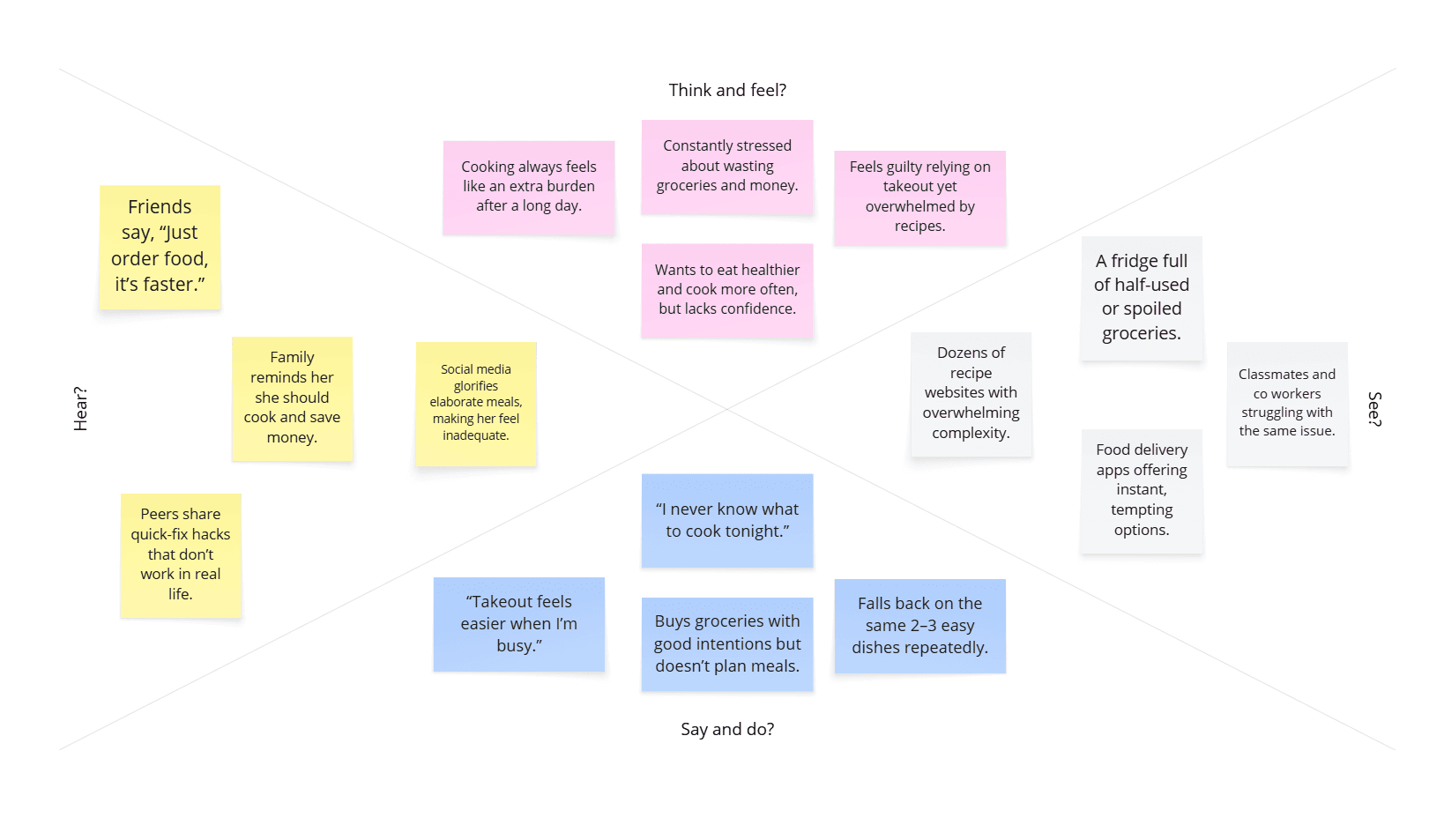

Stepping into Sarah’s shoes meant experiencing the small but heavy moments of her daily life, standing in front of a fridge full of unused groceries, feeling the weight of decision fatigue after a long day, and wishing cooking felt less like a chore and more like a choice. Through the empathy map, I was able to capture not just what she says and does, but also what she thinks and feels, uncovering the frustrations and hopes that would guide the design forward.
Empathy mapping
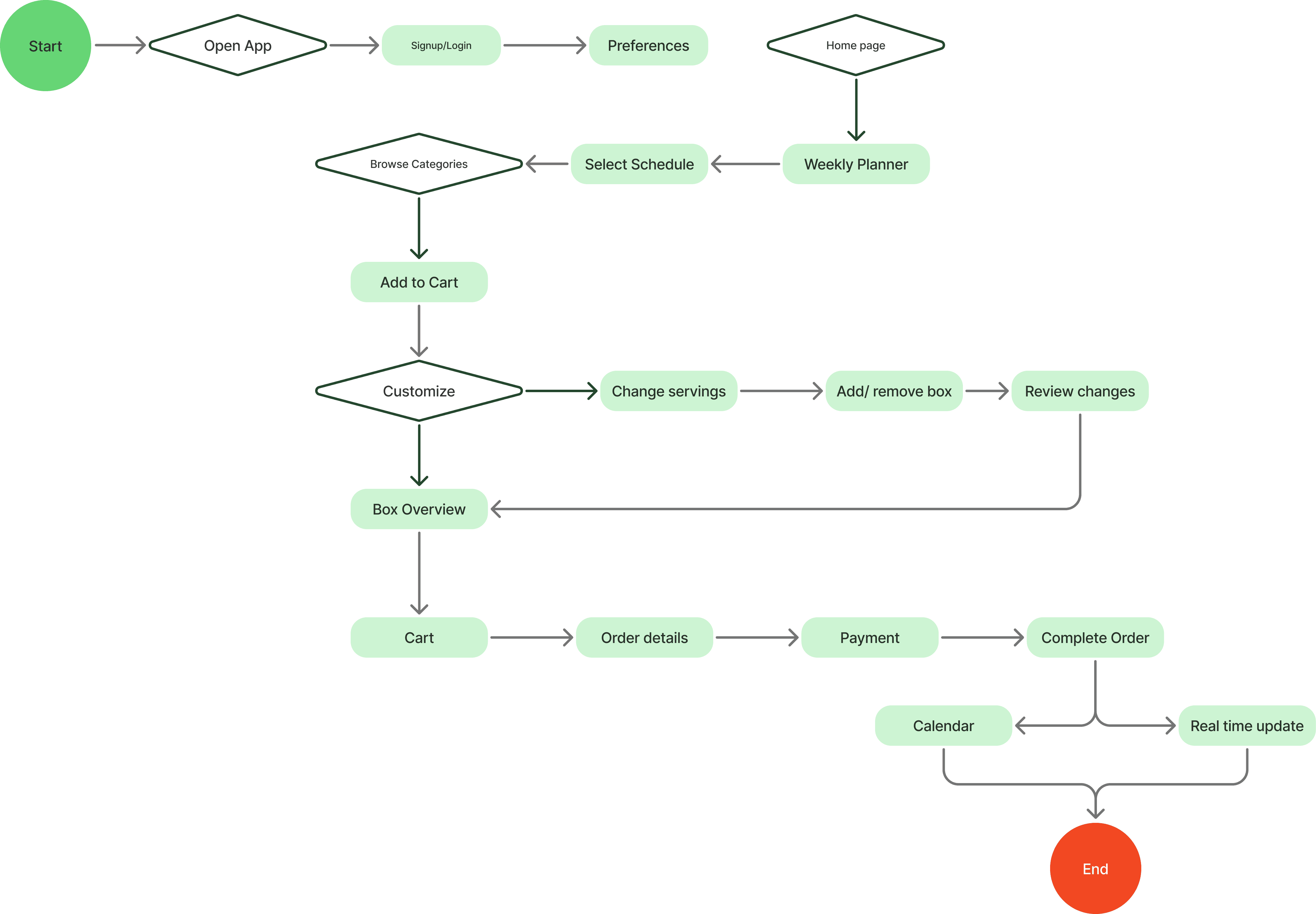
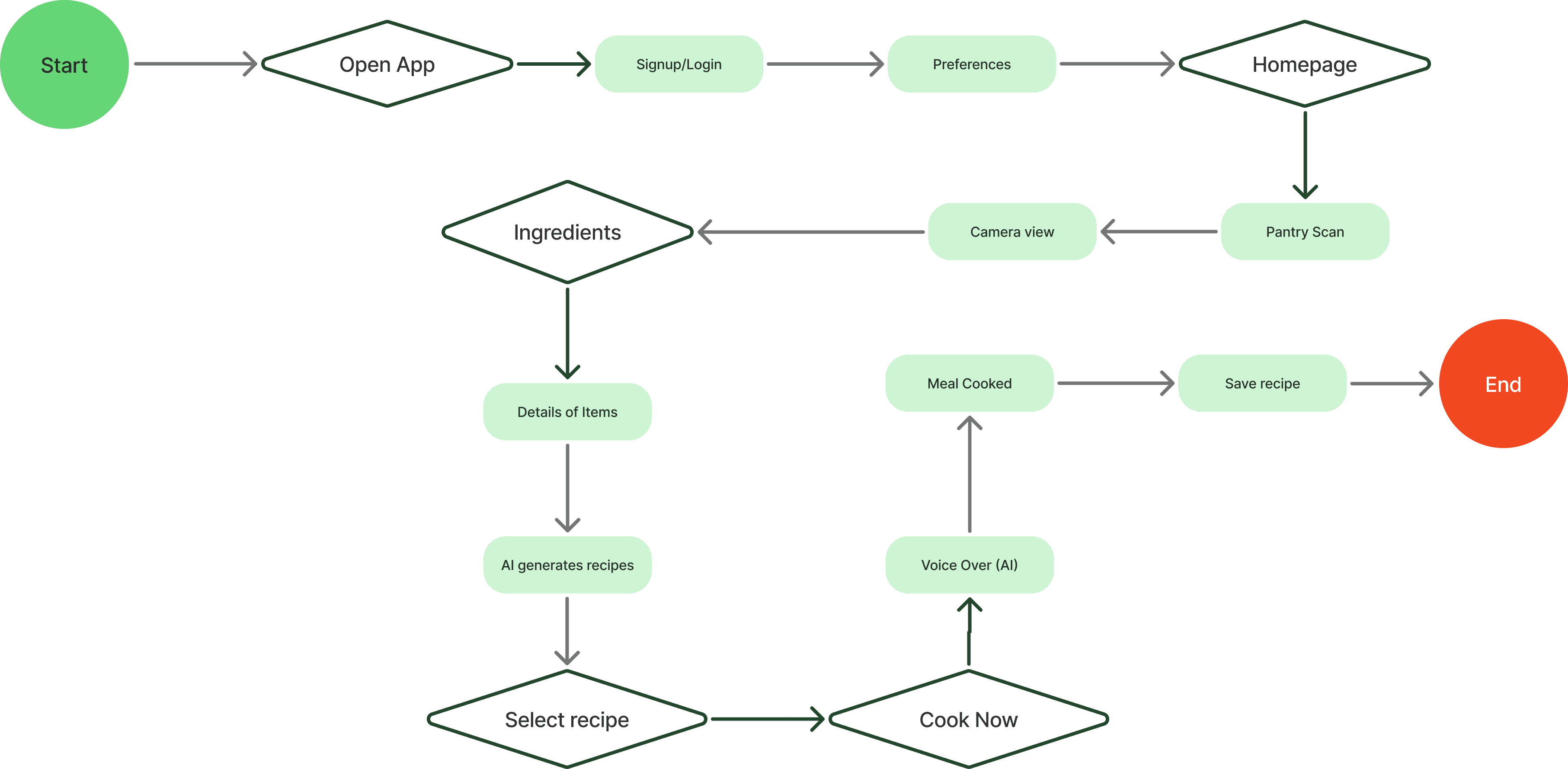
To capture the different ways users approach cooking, I designed two user flows — one showing how busy individuals plan their week and order curated recipe boxes, and another showing how they make the most of existing groceries through pantry scan and AI support. Together, these flows reflect the flexibility of the app to adapt to real-life cooking habits.
User Flow
HOW MIGHT WE
How might we simplify weekly meal planning for busy
lives?
How might we deliver recipe boxes with only what's
needed?
How might we guide users to cook with confidence?
How might we cut down the stress of daily food
choices?
How might we turn leftover groceries into easy meals?
How might we show the positive impact of smarter
cooking?
Here are the key insights I attracted from Affinity mapping:
Groceries often go unused because portions don’t fit single lifestyles.
Planning meals feels like an exhausting task, not a simple routine.
Low confidence keeps users stuck in a cycle of repetitive meals.
Endless recipe options overwhelm rather than inspire decision-making.
My approach
Keep It Simple – Clear, effortless flows that respect busy schedules.
Reduce Waste, Add Value – Every feature should save food, money, or time.
Build Confidence, Not Pressure – Step-by-step, adaptive guidance that encourages learning.
Personalization Over Overwhelm – Curated choices tailored to needs, not endless lists.
Celebrate Progress – Show users the positive impact of cooking at home.
Defining design principles
To make sure my design truly solved these problems, I defined a set of principles to guide every decision. These principles became my compass, ensuring the app stayed simple, supportive, and impactful in real users’ everyday lives.
Affinity mapping
With my design principles as a compass, I synthesized my research by clustering user pain points and ideas under the design principles I had defined. This process turned scattered insights into clear focus areas, making it easier to see which features would directly address user struggles.
BRANDING
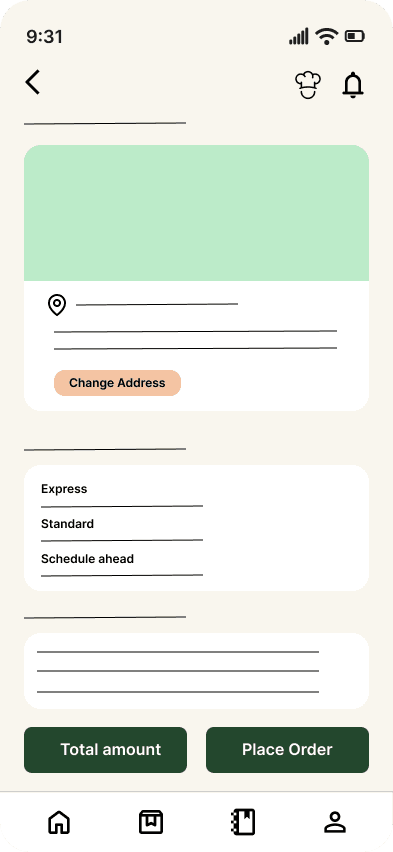
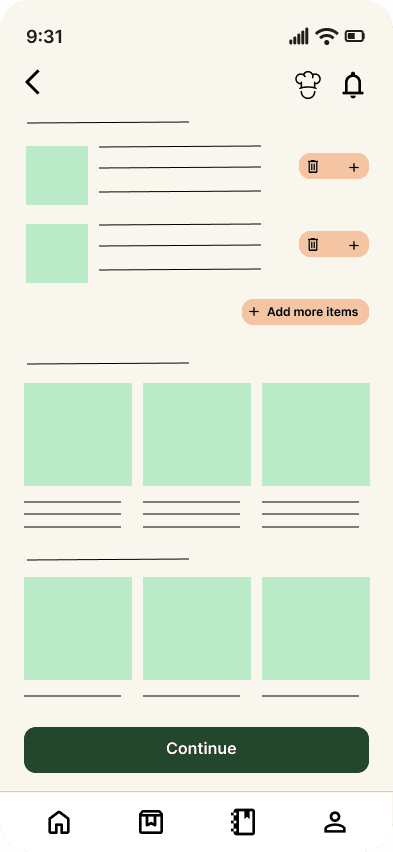
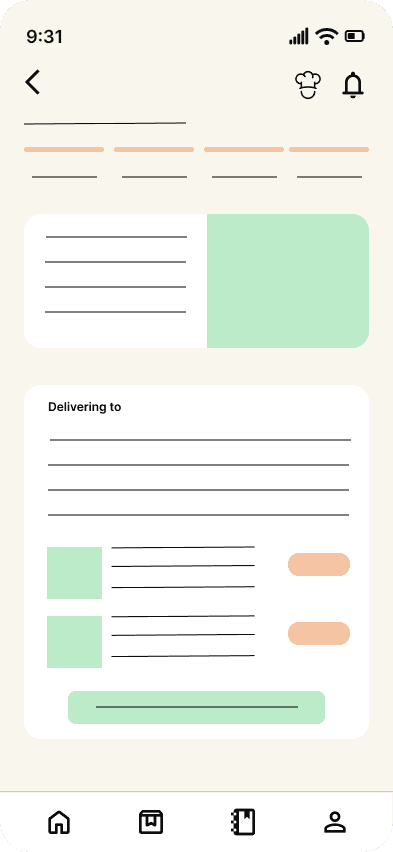
With the structure mapped, I sketched lo-fi wireframes to bring the user's story to life, showing how planning, customizing and cooking unfold step by step.
USABILITY TESTING
I then moved to observing users to understand their experience.
Users liked the clarity and organization of curated recipe boxes.
The AI guidance felt friendly and approachable for beginners.
The Impact dashboard clearly visualized progress and felt motivating.
Users loved the exact portion boxes for reducing effort and waste.
Some suggested adding Skip/Replay controls for the AI buddy.
Users appreciated the clean, intuitive layout.
The pantry scan flow was simple and easy to follow.
MID-FIDELITY WIREFRAMES
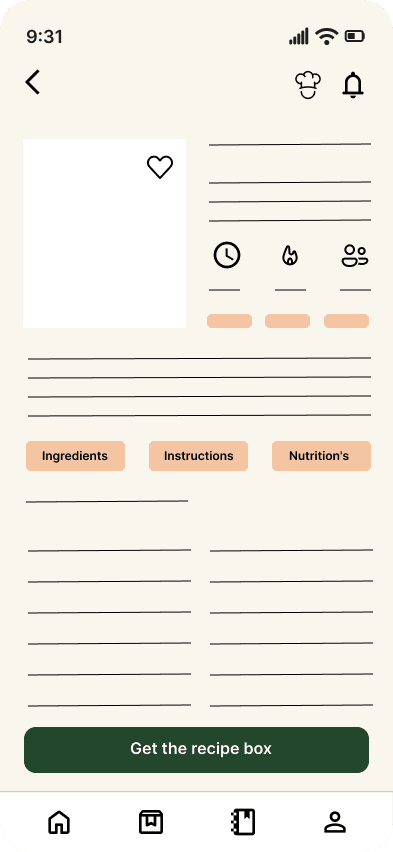
With the structure mapped, I sketched lo-fi wireframes to bring the user's story to life, showing how planning, customizing and cooking unfold step by step.
Low Fidelity wireframe
With the structure mapped, I sketched lo-fi wireframes to bring the user's story to life, showing how planning, customizing and cooking unfold step by step.
Connect to Content
Add layers or components to make infinite auto-playing slideshows.
Information Architecture
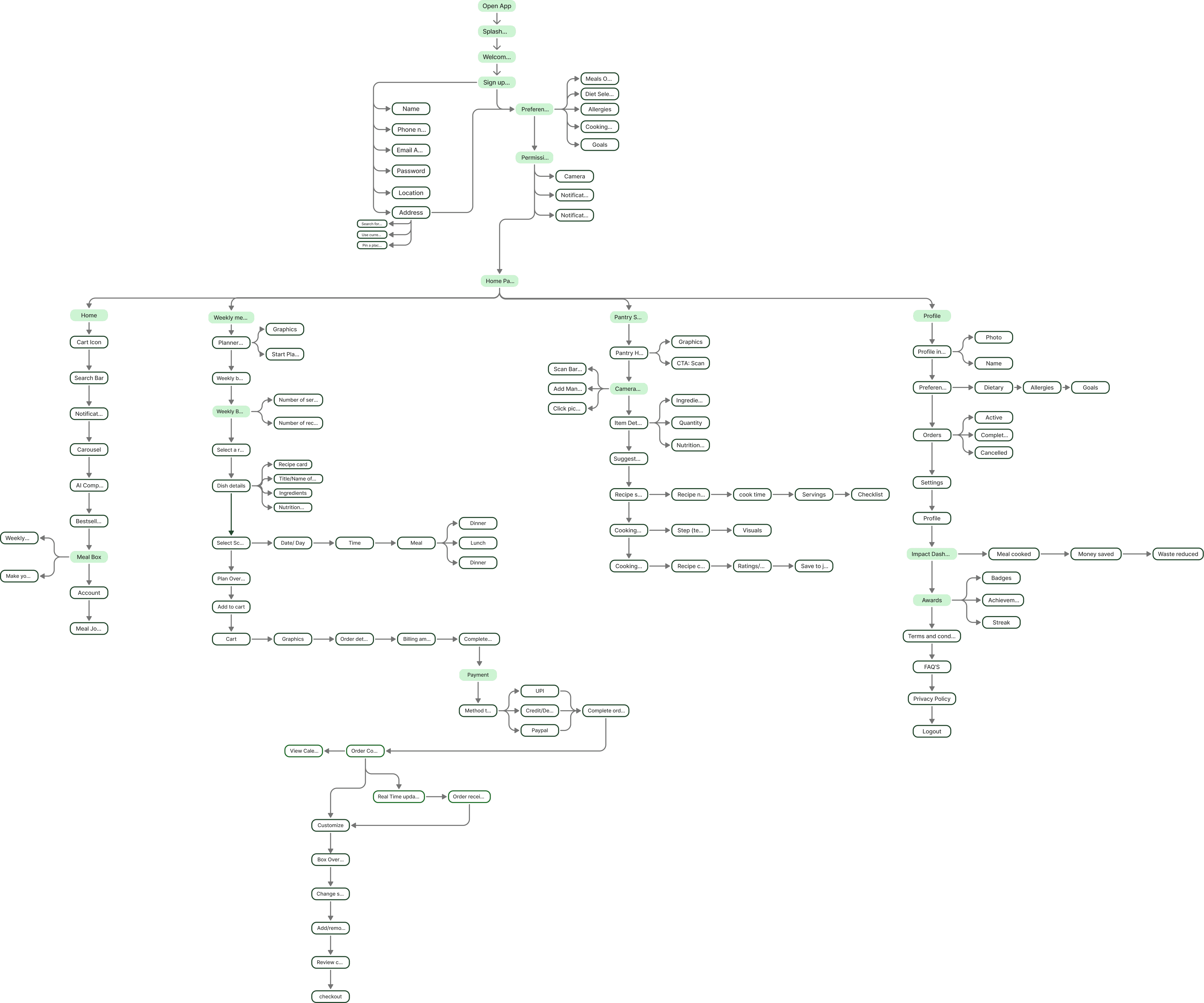
Cooking often feels messy and unstructured, so I built an Information Architecture to turn chaos into clarity, mapping a guided journey for users.
View full Information Architecture on Figjam
HIGH-FIDELITY WIREFRAMES
With the structure mapped, I sketched lo-fi wireframes to bring the user's story to life, showing how planning, customizing and cooking unfold step by step.
PROTOTYPE
Reflections and learnings
Learned to simplify complex meal-planning journeys.
Understood the value of empathy in design.
Realized how research shapes real user solutions.
Strengthened storytelling through user-centric thinking.
Gained clarity in turning insights into structure.
Saw how good design can make cooking feel effortless.
Reflections and learnings
Integrate AI voice for cooking guidance.
Enable smarter grocery and pantry tracking.
Build a community for recipe sharing and motivation.
Conduct large-scale usability testing for deeper insights.
Cook it easy
Cook it easy reimagines cooking for busy and inexperienced individuals transforming wasted groceries and takeout habits into guided, stress-free moments through weekly planning, curated recipe boxes, a smart pantry scan and an AI companion.
Context :
Design Certification Project
Industry :
Food
Team size :
Solo
What I did
UI/UX design
User Research
User testing
Background Overview
Students, young professionals, and people living away from home face a daily struggle that goes beyond academics or work , cooking for themselves.
Moving out brings freedom, but also the everyday question of " What should I eat tonight?". For students and busy professionals, limited time and little cooking experience means groceries go to waste, recipes feel overwhelming and takeout becomes routine. What should be simple instead turns into stress, waste and lost confidence .
This everyday struggle opened the door for a solution designed to make cooking easier, smarter, and more supportive.
Feature Highlights:
Subtitle
Title
Subtitle
Title
Subtitle
Title
Subtitle
Title
Exploring user pain points
Designing the flow
Prototyping my idea
My Role:
As the sole designer on this project, I took ownership of the end-to-end design process, from discovery and research to wireframing, prototyping, and final execution. I acted as both strategist and creator, ensuring every decision stayed true to user needs and the overall product vision.
Project Goal:
My goal was not to design just another recipe app, but a true cooking companion. The vision was to create a product that makes planning effortless, cooking guided, and progress visible, helping users turn wasted groceries and stressful decisions into simple, sustainable routines.
defining the problem
Nearly 40% of food is wasted, and much of it comes from households just like those of students and busy professionals. Groceries are bought with good intentions but nearly 90% of what gets thrown away is still perfectly edible. For people living away from home, this cycle of waste isn’t just about money — it adds stress, guilt, and contributes to a much bigger global problem.
CHallenge
To create a digital solution that empowers busy students and professionals living away from home to plan smarter, minimize food waste, and build confidence in cooking.
My findings
Primary Research
To deeply understand how students, young professionals, and people living away from home manage cooking, I conducted in-depth interviews and a survey (ages 18–32). These conversations revealed that cooking was not just a functional task — it was tied to stress, time pressure, confidence, and even guilt about waste.
Many participants admitted groceries often went to waste,
with fresh vegetables and diary spoiling before they were used.
Meal Planning was rare, and mostly decided what to eat at the
very last minute, often out of convenience.
Takeout was a frequent fallback, especially after long days
when energy for cooking is very low.
Recipes found online were described as overwhelming,
assuming skills, tools, or ingredients users didn't have.
Time pressure was consistently cited as the biggest barrier,
making cooking feel like an added chore.
Decision fatigue was a recurring frustration, with users saying
the hardest part wasn't cooking but choosing what to make.
Most stuck to a very limited set of dishes, repeating the same
meals due to lack of variety and confidence.
Users wanted a solution that made cooking simpler, more
guided and less wasteful.
Cooking often feels overwhelming for students and busy professionals — from last-minute meal decisions to unused groceries, the daily struggle isn’t about food itself, but about time, planning, and confidence in the kitchen.
Household waste: One-third of all food in the US goes uneaten from households.
Financial loss: $728 waster per person each year.
Small Households: Singles waste more that that of families.
Meal planning gap: Poor planning leads to spoilage and takeout.
Time pressure: Busy lives make cooking feel overwhelming.
Confidence Barrier: Recipes often feel too complex leading to lack of confidence
Decision fatigue: Choosing meals is a daily struggle.
Emerging solutions: Digital tools help cut the waste.
Secondary Research
I reviewed industry reports and case studies to understand how poor planning, overbuying, and lack of cooking confidence contribute to household food waste, especially for students and busy professionals living away from home.
demerit
Limited flexibility, meals can't adapt to what users already have.
Feature heavy and tied only to Samsung ecosystem, overwhelming the beginners.
Too many choices cause decision fatigue, with limited pantry personalization.
Company name
Hello fresh
Samsung food
Yummly
Merit
Provides pre-portioned ingredients with clear recipe cards.
AI powered ingredient recognition and meal planning.
Large recipe library with guided cooking and recommendations.
EDGE
Exact-portion boxes with flexible weekly planning, letting users customize meals to their schedules.
Keeps AI simple and supportive, using pantry scans and guided steps for confidence-building.
It curates focused recipe boxes and weekly plan cutting down overwhelm while adding variety.
I conducted a competitive analysis of leading food and recipe platforms, identifying where they succeed and where they fall short, to uncover clear opportunities for Cook It Easy to stand out with personalized meal planning, smart pantry use, and guided cooking support.
COMPETETIVE ANALYSIS
Who is in the market?
Stepping into Sarah’s shoes meant experiencing the small but heavy moments of her daily life, standing in front of a fridge full of unused groceries, feeling the weight of decision fatigue after a long day, and wishing cooking felt less like a chore and more like a choice. Through the empathy map, I was able to capture not just what she says and does, but also what she thinks and feels, uncovering the frustrations and hopes that would guide the design forward.
Empathy mapping
To capture the different ways users approach cooking, I designed two user flows — one showing how busy individuals plan their week and order curated recipe boxes, and another showing how they make the most of existing groceries through pantry scan and AI support. Together, these flows reflect the flexibility of the app to adapt to real-life cooking habits.
User Flow
HOW MIGHT WE
How might we simplify weekly meal planning for busy
lives?
How might we deliver recipe boxes with only what's
needed?
How might we guide users to cook with confidence?
How might we cut down the stress of daily food
choices?
How might we turn leftover groceries into easy meals?
How might we show the positive impact of smarter
cooking?
Here are the key insights I attracted from Affinity mapping:
Groceries often go unused because portions don’t fit single lifestyles.
Planning meals feels like an exhausting task, not a simple routine.
Low confidence keeps users stuck in a cycle of repetitive meals.
Endless recipe options overwhelm rather than inspire decision-making.
My approach
Keep It Simple – Clear, effortless flows that respect busy schedules.
Reduce Waste, Add Value – Every feature should save food, money, or time.
Build Confidence, Not Pressure – Step-by-step, adaptive guidance that encourages learning.
Personalization Over Overwhelm – Curated choices tailored to needs, not endless lists.
Celebrate Progress – Show users the positive impact of cooking at home.
Defining design principles
To make sure my design truly solved these problems, I defined a set of principles to guide every decision. These principles became my compass, ensuring the app stayed simple, supportive, and impactful in real users’ everyday lives.
Affinity mapping
With my design principles as a compass, I synthesized my research by clustering user pain points and ideas under the design principles I had defined. This process turned scattered insights into clear focus areas, making it easier to see which features would directly address user struggles.
BRANDING
With the structure mapped, I sketched lo-fi wireframes to bring the user's story to life, showing how planning, customizing and cooking unfold step by step.
USABILITY TESTING
I then moved to observing users to understand their experience.
Users liked the clarity and organization of curated recipe boxes.
The AI guidance felt friendly and approachable for beginners.
The Impact dashboard clearly visualized progress and felt motivating.
Users loved the exact portion boxes for reducing effort and waste.
Some suggested adding Skip/Replay controls for the AI buddy.
Users appreciated the clean, intuitive layout.
The pantry scan flow was simple and easy to follow.
MID-FIDELITY WIREFRAMES
With the structure mapped, I sketched lo-fi wireframes to bring the user's story to life, showing how planning, customizing and cooking unfold step by step.
Low Fidelity wireframe
With the structure mapped, I sketched lo-fi wireframes to bring the user's story to life, showing how planning, customizing and cooking unfold step by step.
Connect to Content
Add layers or components to make infinite auto-playing slideshows.
Information Architecture
Cooking often feels messy and unstructured, so I built an Information Architecture to turn chaos into clarity, mapping a guided journey for users.
View full Information Architecture on Figjam
HIGH-FIDELITY WIREFRAMES
With the structure mapped, I sketched lo-fi wireframes to bring the user's story to life, showing how planning, customizing and cooking unfold step by step.
PROTOTYPE
Reflections and learnings
Learned to simplify complex meal-planning journeys.
Understood the value of empathy in design.
Realized how research shapes real user solutions.
Strengthened storytelling through user-centric thinking.
Gained clarity in turning insights into structure.
Saw how good design can make cooking feel effortless.
Reflections and learnings
Integrate AI voice for cooking guidance.
Enable smarter grocery and pantry tracking.
Build a community for recipe sharing and motivation.
Conduct large-scale usability testing for deeper insights.
Cook it easy
Cook it easy reimagines cooking for busy and inexperienced individuals transforming wasted groceries and takeout habits into guided, stress-free moments through weekly planning, curated recipe boxes, a smart pantry scan and an AI companion.
Context :
Design Certification Project
Industry :
Food
Team size :
Solo
What I did
UI/UX design
User Research
User testing